Almost everyone has experienced opening a social media app “for a minute” and somehow losing an hour without noticing. One video turns into ten. One post becomes hundreds. The thumb keeps moving automatically even when the brain no longer feels fully interested.
That’s why conversations about why humans are addicted to endless scrolling feel so relatable today. People know scrolling often makes them mentally tired, distracted, or emotionally worse afterward.
Yet they still keep doing it. And honestly, that contradiction is exactly what makes endless scrolling so psychologically powerful.
The behavior feels automatic because modern apps are carefully designed to keep human attention locked in for as long as possible.
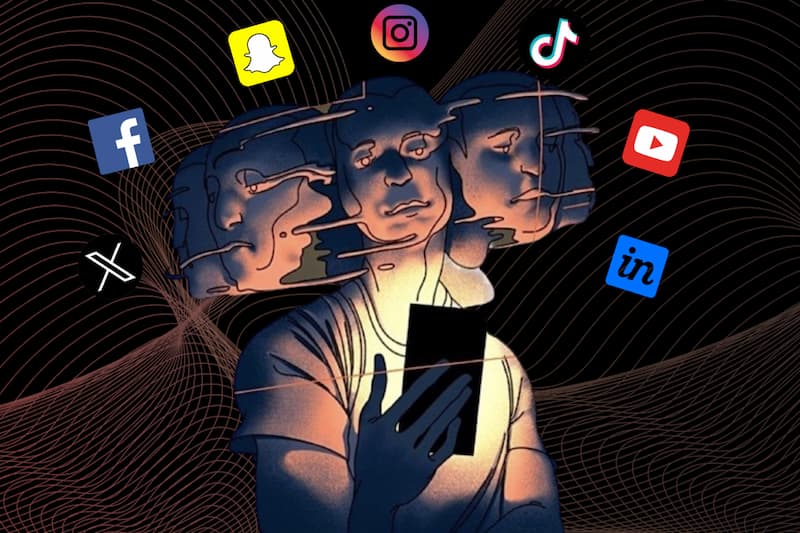
Why Humans Are Addicted to Endless Scrolling Starts With Dopamine
One major reason behind why humans are addicted to endless scrolling is dopamine.
Dopamine is often misunderstood as a “pleasure chemical,” but psychologically it is more connected to anticipation and reward-seeking behavior. The brain becomes highly engaged when it expects something interesting might appear soon.
Endless scrolling platforms exploit this perfectly.
Every swipe creates uncertainty:
- Maybe the next video will be funny.
- Maybe the next post will be shocking.
- Maybe something emotionally rewarding is coming next.
That unpredictability keeps the brain searching continuously.
And honestly, humans become extremely attached to unpredictable rewards psychologically.
Variable Rewards Are Extremely Addictive
One reason scrolling feels impossible to stop is because social media works similarly to slot machines psychologically.
Not every post is exciting. Not every video is interesting.
But occasionally something highly entertaining, emotional, surprising, or satisfying appears unexpectedly.
That randomness matters. The brain becomes addicted to searching for the next rewarding moment because unpredictable rewards trigger stronger dopamine responses than predictable ones.
People keep scrolling because the next swipe might finally deliver something emotionally stimulating again.
And that “maybe” becomes incredibly powerful over time.
Infinite Feeds Remove Natural Stopping Points
In older forms of entertainment, people naturally reached endings.
- A TV episode ended.
- A magazine finished.
- A movie stopped.
But modern apps removed stopping points completely.
There is always another video.
- Another post.
- Another recommendation.
- Another notification.
The brain struggles to disengage because there is never a clear psychological signal to stop.
That infinite structure keeps attention trapped inside continuous consumption loops much longer than people originally intend.
Why Humans Are Addicted to Endless Scrolling More Than Ever Today
Another reason why humans are addicted to endless scrolling feels increasingly common is because modern life creates constant mental exhaustion.
People are stressed, overwhelmed, emotionally tired, and overstimulated most of the time. Endless scrolling provides temporary escape from responsibilities, anxiety, loneliness, boredom, uncertainty, or emotional discomfort.
Scrolling becomes emotional avoidance disguised as entertainment.
For a while, the brain stops focusing on personal stress because attention stays occupied by endless new content constantly replacing itself every few seconds.
And honestly, many people are not just addicted to scrolling itself.
They are addicted to temporarily escaping their own thoughts.

The Brain Loves Novelty
Humans naturally pay attention to new information.
From an evolutionary perspective, noticing novelty helped humans survive. New sounds, movements, or information could signal opportunity or danger. Modern social media platforms exploit that instinct constantly.
Every swipe introduces something different: a new face, new opinion, new joke, new story, new controversy, new emotional reaction.
The brain becomes overstimulated by endless novelty because it keeps searching for emotionally meaningful information continuously.
That’s why scrolling often feels mentally exhausting afterward.
The nervous system processes huge amounts of rapid stimulation without real rest.
Short Videos Train Attention Spans
Modern scrolling platforms especially rely on short-form content because rapid stimulation keeps dopamine cycles moving faster.
Quick videos create constant emotional switching: humor, shock, sadness, motivation, anger, curiosity, then immediately another emotion seconds later.
The brain adapts to this pace over time.
As attention spans become trained for rapid stimulation, slower activities like reading, studying, deep thinking, or long conversations start feeling harder psychologically.
And honestly, many people underestimate how much endless scrolling quietly reshapes concentration and mental patience.
Why Humans Are Addicted to Endless Scrolling During Loneliness
One hidden reason why humans are addicted to endless scrolling is emotional connection.
Humans naturally crave belonging, attention, and social interaction. Social media creates the illusion of constant connection even when people are physically alone.
Scrolling makes people feel temporarily connected to: other lives, other thoughts, other emotions, and endless human activity.
That feeling can become emotionally comforting during loneliness or isolation.
Even passive scrolling gives the brain a sense of social stimulation, which explains why people often reach for their phones automatically during quiet moments.
Boredom Became Almost Impossible to Tolerate
Modern humans rarely experience boredom naturally anymore.
The second boredom appears, phones instantly remove it.
Waiting in line? Scroll.
Sitting quietly? Scroll.
Feeling uncomfortable? Scroll.
Over time, the brain loses tolerance for stillness because stimulation becomes constantly available.
That creates psychological dependency.
The mind starts expecting continuous entertainment and emotional stimulation every few seconds. Without it, normal quiet moments suddenly feel uncomfortable or emotionally empty.
And honestly, endless scrolling may have changed human relationships with boredom more than people realize.
Algorithms Learn Human Weaknesses Extremely Well
Social media algorithms constantly analyze: what people watch, pause on, react to, rewatch, share,
or emotionally engage with.
Over time, platforms become frighteningly effective at predicting what keeps users emotionally attached longest.
The feed slowly adapts specifically to individual psychological triggers: curiosity, anger, attraction, nostalgia, validation, or emotional stimulation.
That personalization makes endless scrolling feel uniquely difficult to resist because the content becomes increasingly optimized for each person psychologically.
Why Humans Are Addicted to Endless Scrolling Even When It Feels Bad
One strange thing about why humans are addicted to endless scrolling is that people often continue scrolling even after it stops feeling enjoyable.
That’s because addictive behaviors are not always driven by pleasure alone.
Sometimes people scroll because: they feel emotionally numb, mentally restless, anxious, lonely,
or too overstimulated to focus on anything else.
The behavior becomes automatic.
People open apps without consciously deciding to. Their hands move before their minds fully catch up. The habit becomes neurologically reinforced through repetition over time.
Endless Scrolling Creates Mental Noise
After long periods of scrolling, many people notice strange mental fatigue.
The brain feels crowded. Thoughts feel fragmented. Focus weakens. Silence feels uncomfortable.
That happens because endless content floods the nervous system with nonstop stimulation without allowing emotional processing or mental recovery.
Humans were never designed to absorb thousands of rapid emotional and visual inputs daily.
And honestly, the brain quietly pays a psychological price for constant overstimulation.
Real Rest and Scrolling Are Not the Same Thing
Many people confuse scrolling with relaxation.
But endless digital stimulation rarely allows the nervous system to fully rest. The brain remains active, alert, emotionally reactive, and constantly consuming information the entire time.
True rest usually involves: mental quiet, slower stimulation, presence, sleep, or emotional calmness.
Scrolling often creates the opposite internally even when it feels temporarily distracting.
That’s why people sometimes finish hours of scrolling feeling mentally emptier instead of refreshed.
Why Humans Are Addicted to Endless Scrolling Is Ultimately About Escape
At its core, why humans are addicted to endless scrolling is deeply connected to emotional escape.
Scrolling distracts people from: stress, uncertainty, loneliness, boredom, overthinking, and emotional discomfort temporarily.
Modern platforms combine dopamine rewards, infinite novelty, emotional stimulation, and algorithmic personalization into experiences specifically designed to hold human attention as long as possible.
And unfortunately, the human brain is extremely vulnerable to that combination psychologically.
Final Thoughts
The truth about why humans are addicted to endless scrolling is that endless scrolling is not simply about weak self-control.
Modern technology is intentionally engineered around human psychology: dopamine, curiosity, novelty, social connection, and emotional stimulation.
The result is a habit that feels automatic for millions of people.
And honestly, maybe the most important realization is this: Many people are not endlessly scrolling because they are lazy.
Sometimes they are simply overwhelmed, emotionally tired, lonely, overstimulated, or searching for distraction in a world that rarely allows the brain to truly rest anymore.