China’s Large-Scale Military Drills Around Taiwan Raise Fears of Escalation in the Taiwan Strait

Military tensions in the Taiwan Strait have intensified after China launched large-scale military exercises around Taiwan, prompting the island’s defense forces to place units on heightened alert and drawing close monitoring from the United States and regional allies.
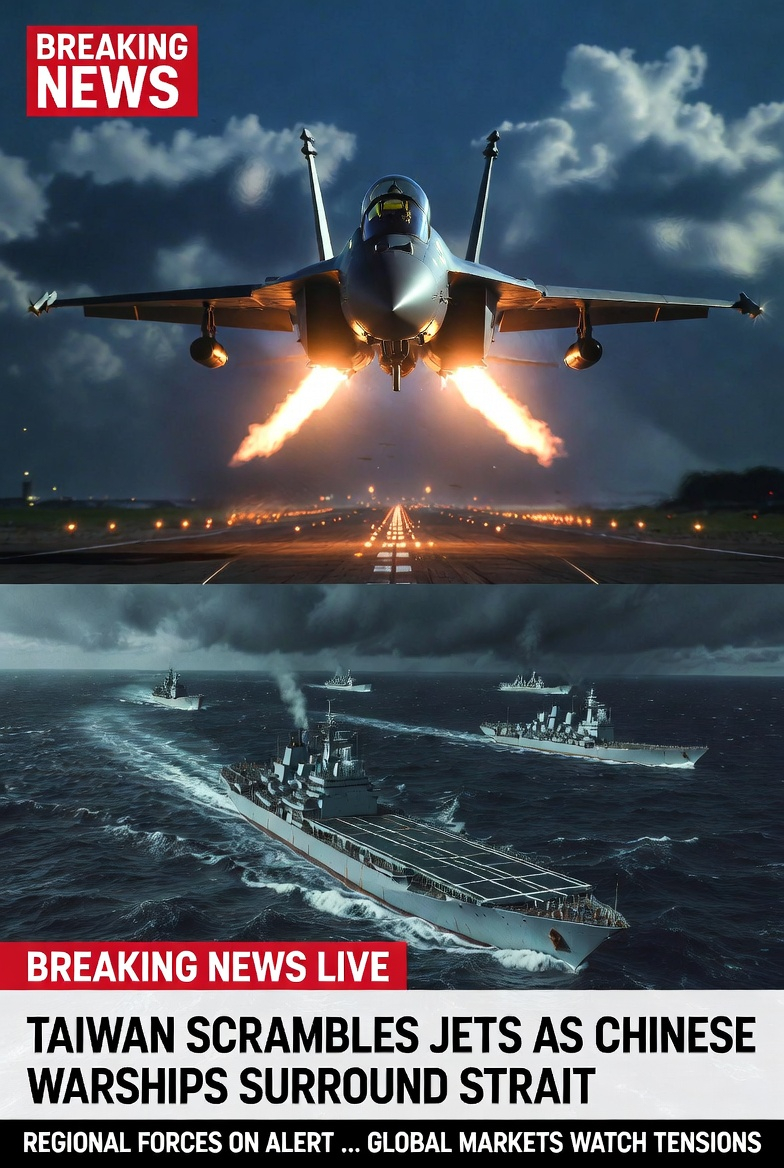
According to Taiwan’s Ministry of National Defense, dozens of Chinese aircraft and several naval vessels were detected operating near the island in recent days, including fighter jets, surveillance aircraft, and warships. Taiwanese officials said the aircraft entered areas near Taiwan’s air defense identification zone, prompting the island to scramble fighter jets and activate air defense systems as a precaution.
Chinese authorities described the drills as routine military exercises aimed at testing combat readiness and safeguarding national sovereignty. However, the scale and proximity of the operations to Taiwan have heightened concerns among security analysts that the exercises are intended to increase pressure on the island and demonstrate Beijing’s military capabilities.
Taiwanese officials have condemned the exercises, calling them destabilizing and accusing Beijing of attempting to intimidate the island through displays of force. In a statement, Taiwan’s defense ministry said its armed forces were closely monitoring the situation and prepared to respond if necessary, emphasizing that the island remains committed to maintaining peace and stability in the region.
The developments have also drawn attention from Washington. Officials from the United States said they were closely observing military movements in the Taiwan Strait and reiterated the importance of maintaining stability in the Indo-Pacific region. A spokesperson for the U.S. Department of State said the United States remains committed to ensuring freedom of navigation and encouraging peaceful resolution of disputes.
Regional governments have expressed concern that rising tensions in the Taiwan Strait could affect broader security and economic stability across Asia. The strait is one of the world’s most important shipping lanes and lies at the center of global supply chains, particularly in the semiconductor industry, where Taiwan plays a crucial role.
Security analysts say the increased military activity reflects a broader pattern of strategic competition in the region. In recent years, China has significantly expanded its naval and air capabilities and conducted more frequent military operations near Taiwan. These activities often include aircraft sorties, naval patrols, and exercises designed to simulate blockade or strike scenarios.
While both sides have largely avoided direct confrontation, experts warn that the growing frequency of military maneuvers raises the risk of accidental escalation. Close encounters between aircraft or naval vessels could potentially trigger incidents that might rapidly intensify tensions.
Background
The dispute between China and Taiwan dates back to the end of the Chinese civil war in 1949, when the defeated Nationalist government retreated to Taiwan while the Communist Party established the People’s Republic of China on the mainland. Beijing considers Taiwan a breakaway province and has repeatedly stated that reunification is a long-term objective.
Taiwan, however, operates as a self-governing democracy with its own political system, military, and economy. While most countries do not formally recognize Taiwan as an independent state, many maintain unofficial relations and economic ties with the island.
The United States plays a particularly significant role in the situation through the Taiwan Relations Act, which allows Washington to provide defensive support to the island. Although the United States does not formally recognize Taiwan diplomatically, it has consistently emphasized the importance of maintaining peace and stability across the Taiwan Strait.

Conclusion
With military forces on all sides closely monitoring developments, analysts say the coming weeks will be critical in determining whether tensions ease or continue to rise. Diplomatic channels remain open, but the growing presence of military assets in the region underscores the delicate balance that currently exists in the Taiwan Strait. As global powers watch the situation unfold, the stability of one of the world’s most strategically important regions remains uncertain.
