U.S. Says Iranian Navy “Combat Ineffective” After Major Losses as Missile Exchanges Intensify Across the Region

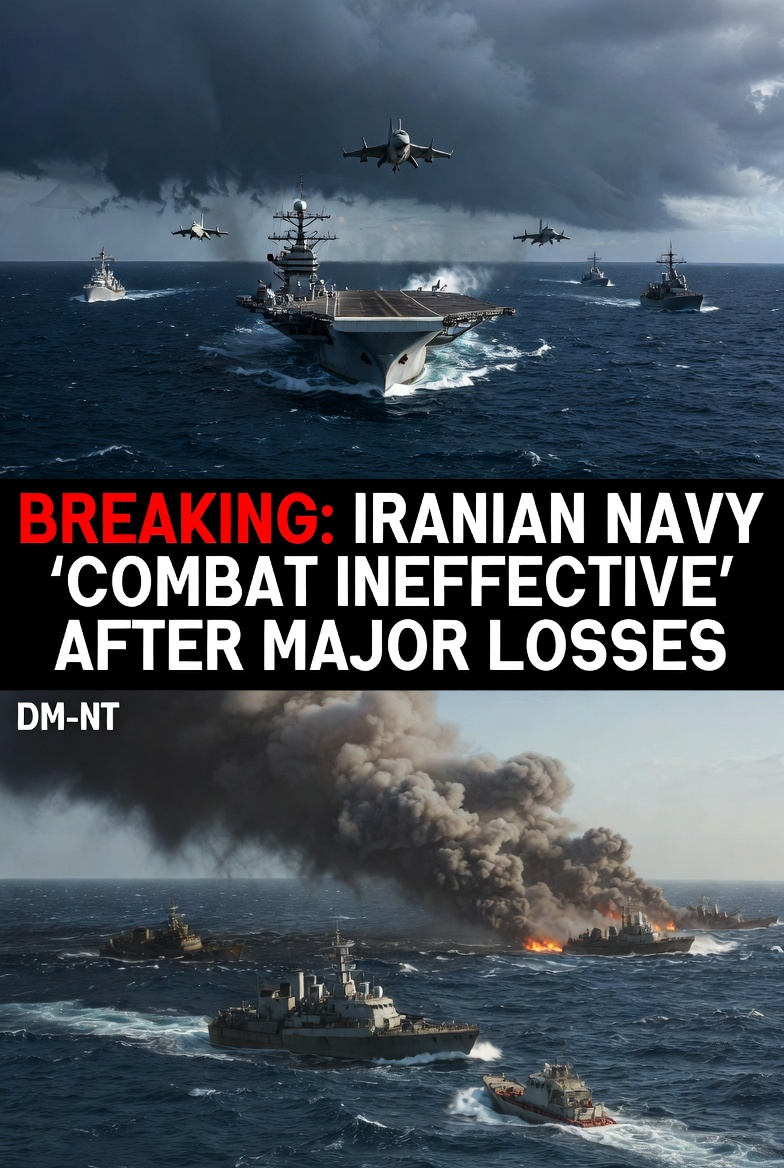
The United States says Iranian naval forces have suffered significant losses in ongoing hostilities, with U.S. Central Command (CENTCOM) reporting the destruction of 16 Iranian mine-laying vessels near the Strait of Hormuz and more than 50 Iranian naval ships sunk since the conflict began. The developments come as U.S.-led coalition forces continue a broad military campaign targeting Iranian military infrastructure, while Iran responds with missile barrages aimed at Israel and regional military installations.
According to CENTCOM, the 16 vessels destroyed earlier this week were believed to be part of Iran’s maritime capability to deploy naval mines in the Strait of Hormuz, a critical global shipping corridor through which a significant portion of the world’s oil supply passes. U.S. officials said neutralizing these vessels was intended to prevent disruptions to international shipping and protect commercial maritime routes.

U.S. Defense Secretary Pete Hegseth stated that cumulative losses inflicted on Iranian naval forces have severely degraded their operational capability. “Based on the scale of damage sustained since the start of this conflict, the Iranian Navy is now considered combat ineffective,” Hegseth said during a defense briefing.
Military officials indicated that coalition naval and air forces have been conducting operations aimed at limiting Iran’s ability to threaten maritime trade and regional military infrastructure. Analysts note that the Strait of Hormuz remains one of the world’s most strategically sensitive waterways, making naval operations there particularly significant.
At the same time, the U.S.-led coalition says it has struck approximately 5,500 targets inside Iran since the campaign began. These targets reportedly include ballistic missile production facilities, drone manufacturing plants, weapons storage depots, and logistical infrastructure believed to support Iran’s military capabilities.
Defense officials said many of the strikes have focused on facilities linked to missile and unmanned aerial vehicle production, which have played a central role in Iran’s military strategy in recent years. Satellite imagery and intelligence reports have been used to identify key sites involved in manufacturing and launching such systems.
Despite the scale of the coalition’s air campaign, Iran continues to launch retaliatory missile strikes across the region. On what military officials described as the eleventh day of intensified hostilities, Iranian forces reportedly launched seven separate missile barrages targeting Israel.
Israeli defense systems intercepted many of the incoming projectiles, though officials have said several missiles caused damage and casualties in certain areas. Meanwhile, Saudi Arabia reported that its air defense systems intercepted ballistic missiles that were aimed at Prince Sultan Air Base, a major Saudi military installation used in cooperation with U.S. forces.
Regional security analysts say the continued exchange of missile strikes highlights the widening scope of the conflict, which now involves multiple countries across the Middle East. “What began as targeted military operations has increasingly evolved into a broader regional confrontation,” said one defense analyst based in Europe.
The Strait of Hormuz remains a central focus of international concern. Roughly one-fifth of the world’s oil supply passes through the narrow waterway each day, making any disruption to maritime traffic there a potential threat to global energy markets.
Historically, tensions involving Iran and Western naval forces in the region have periodically escalated into confrontations involving patrol boats, drones, and missile systems. Iran has long maintained the capability to deploy naval mines and small attack vessels designed to challenge larger naval forces operating in the Gulf.
The latest developments come amid already heightened geopolitical tensions across the Middle East, where conflicts involving Iran, Israel, and other regional actors have intensified in recent months. Governments around the world are closely monitoring the situation due to its potential impact on global security and energy supplies.
International diplomatic efforts to de-escalate the situation are ongoing, though no immediate breakthrough has been reported. Several countries have called for restraint from all sides and warned that continued escalation could risk drawing additional regional actors into the conflict.
For now, coalition military operations and Iranian retaliatory strikes appear likely to continue as both sides seek to assert strategic advantages. Analysts say the coming weeks will be critical in determining whether the confrontation remains contained or develops into a broader regional crisis.
