Escalating U.S.–Iran Conflict Leaves More Than 150 American Troops Wounded, Pentagon Says

Tensions between the United States and Iran have intensified dramatically as the Pentagon confirmed that more than 150 American service members have been wounded since the start of the latest phase of the conflict. The updated casualty figures, released during a recent defense briefing, mark a significant increase compared with earlier reports and highlight the growing human cost of the confrontation.
According to U.S. defense officials, the injuries occurred during a series of attacks linked to Iranian military actions and proxy forces operating across the region. Many of the wounded troops were reportedly stationed at bases in the Middle East that came under missile and drone strikes. While most injuries are believed to be non-fatal, several service members required evacuation to regional military hospitals for advanced treatment.

The Pentagon emphasized that the updated casualty numbers reflect ongoing medical evaluations and previously unreported cases of injuries, including those caused by blast impacts and debris during missile attacks. Officials stated that many of the wounded troops are expected to recover, though the rising number has raised concerns about the widening scale of the conflict.
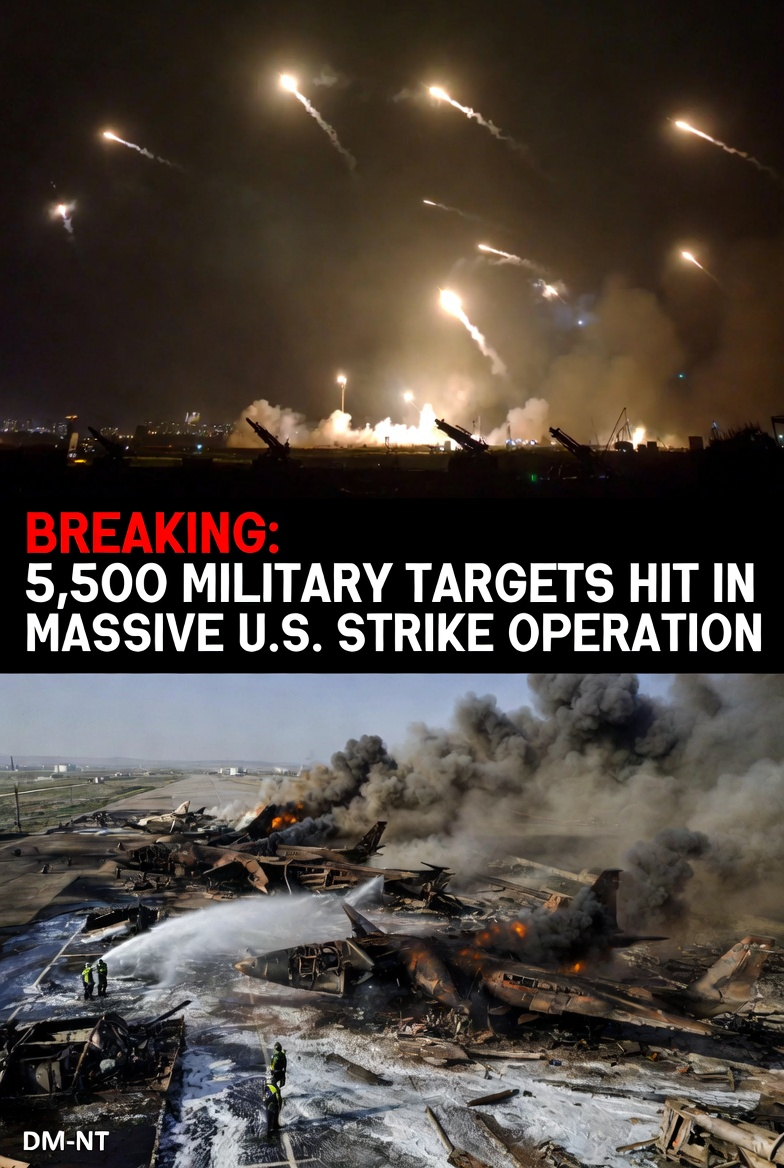
At the same time, U.S. military officials revealed that American forces have carried out an extensive strike campaign against Iranian military infrastructure. According to the Pentagon, more than 5,500 military targets inside Iranian territory have been struck since the operation began. The strikes reportedly involved a wide range of precision-guided weapons, including cruise missiles, long-range airstrikes, and advanced drone systems.
Defense officials said the targets included weapons depots, missile launch facilities, radar installations, command centers, and other strategic military infrastructure believed to support Iranian military operations. The goal of the campaign, according to U.S. officials, is to weaken Iran’s ability to carry out further attacks against American personnel and allied forces in the region.
“The United States will continue to take necessary and decisive actions to protect our troops and our partners,” a Pentagon spokesperson said during the briefing. “Our operations are focused on degrading military capabilities that pose a direct threat to U.S. personnel.”
The scale of the reported strike campaign has drawn significant international attention. Military analysts note that hitting thousands of targets suggests a sustained and highly coordinated operation, one that may continue if tensions between Washington and Tehran remain unresolved.
Iranian authorities have not publicly confirmed the full extent of the damage caused by the strikes, but regional media reports indicate that several military facilities have been affected. Iranian officials have repeatedly warned that continued attacks on their territory could lead to further retaliation.
Experts say the growing number of injured U.S. troops could increase political pressure on Washington as the conflict develops. Rising casualty figures often intensify public scrutiny of military operations, particularly when hostilities show no immediate signs of slowing down.
“The casualty update signals that the conflict is becoming more dangerous and unpredictable,” said one defense analyst. “When both sides are conducting large-scale operations, the risk of further escalation increases dramatically.”
The broader Middle East region is now watching the situation closely, as neighboring countries remain concerned about the possibility of a wider confrontation. Any further escalation could affect regional security, global energy markets, and international diplomatic efforts aimed at preventing a larger war.
For now, U.S. military officials say their priority remains the safety of American personnel and the continuation of operations aimed at neutralizing immediate threats. However, with casualty numbers rising and strike operations expanding, the conflict between the United States and Iran appears to be entering a more volatile and uncertain phase.
As the situation continues to evolve, governments and observers around the world are closely monitoring developments, hoping that diplomatic channels may eventually prevent the crisis from escalating into a broader regional war.
