TEHRAN IN SHOCK: SUPREME LEADER ALI KHAMENEI KILLED IN UNPRECEDENTED AIRSTRIKES; MOJTABA KHAMENEI ASSUMES EMERGENCY POWERS

TEHRAN, IRAN — In a geopolitical earthquake that threatens to reshape the Middle East, Iranian state media has officially confirmed the death of Supreme Leader Ayatollah Ali Khamenei. The absolute ruler and spiritual figurehead was killed during a massive, coordinated wave of airstrikes executed by the United States and Israel.
The unprecedented military operation, which decimated command bunkers and heavily fortified government complexes across Tehran, has plunged the nation into immediate chaos and sparked global fears of an all-out regional war.

The Decisive Strike
The assassination occurred during the opening salvos of a broader military campaign aimed at crippling Iran’s nuclear infrastructure and ballistic missile capabilities. According to preliminary reports, allied stealth fighters and precision-guided munitions bypassed what remained of Iran’s heavily degraded air defense systems, directly hitting the Supreme Leader’s secure command compound.
Rescue workers and elite Islamic Revolutionary Guard Corps (IRGC) units spent hours sifting through the burning rubble before official channels interrupted standard broadcasting. A weeping state television anchor, dressed in black, delivered the news, instantly plunging the country into a state of profound shock and triggering a mandatory 40-day period of national mourning.
An Immediate Succession
Faced with the sudden decapitation of its leadership amidst an active, high-intensity conflict, the Iranian regime moved with unprecedented speed to secure its survival. The Assembly of Experts convened in a secure, undisclosed bunker to officially confirm Mojtaba Khamenei, the late Supreme Leader’s son and a highly influential yet historically shadowy figure, as his father’s successor.
Mojtaba Khamenei now inherits a nation engulfed in flames. Taking the helm as the new Supreme Leader, his immediate challenge is to prevent the total collapse of the state apparatus while orchestrating a military response against two of the world’s most advanced armed forces. Western intelligence analysts suggest that Mojtaba has deep, entrenched ties with the hardline factions of the IRGC, indicating that Tehran’s retaliation could be both brutal and asymmetrical.
Chaos in the Capital
Inside Iran, the domestic situation is rapidly deteriorating. Tehran is reeling from consecutive nights of heavy bombardment. Millions of civilians are caught between overwhelming grief for their fallen leader and sheer panic over the escalating war.
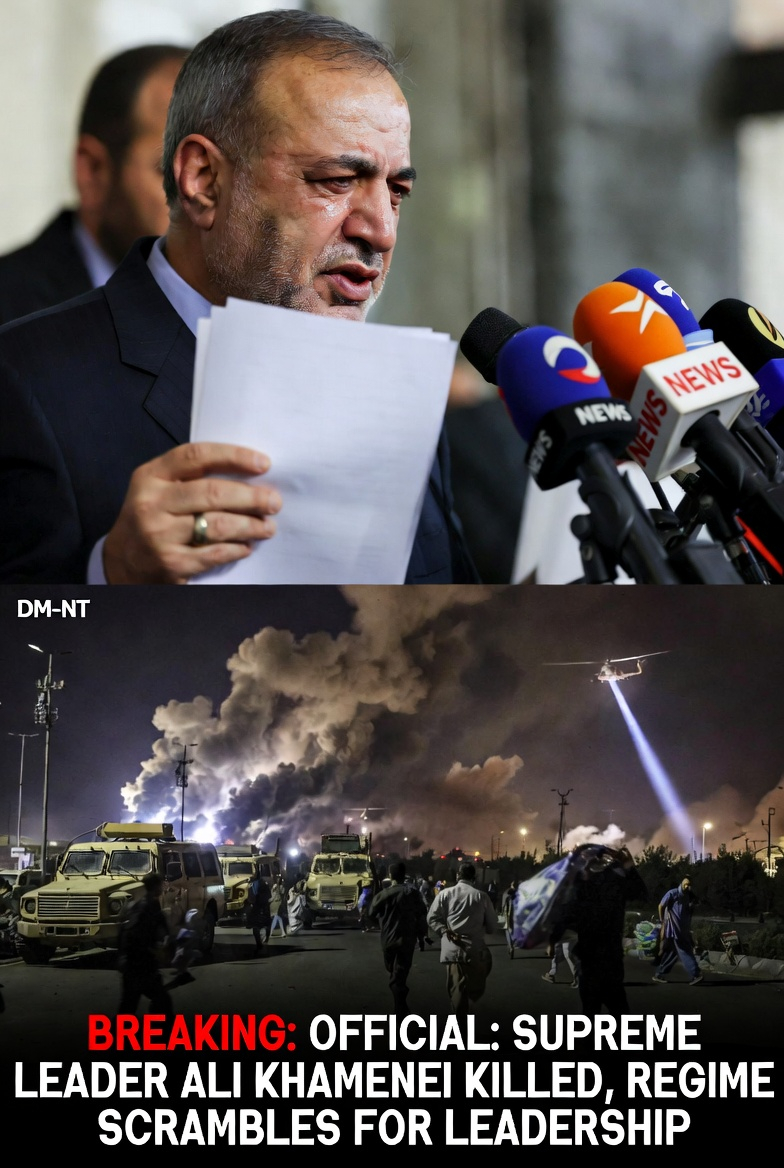
Footage emerging from the capital shows highly chaotic scenes: massive crowds flooding Azadi Square in weeping vigils, intertwined with desperate citizens attempting to flee the city gridlock. Basic utilities are failing, and the newly established emergency government has reportedly declared martial law in several major provinces to quell potential internal unrest and manage the mass displacement of civilians.
Global Ramifications
The shockwaves of Khamenei’s death have immediately reverberated across the globe. The Pentagon and the Israeli Defense Forces (IDF) have placed all regional bases and assets on maximum alert, anticipating fierce retaliatory strikes from Iran’s extensive network of proxy militias across Lebanon, Syria, Iraq, and Yemen.
Furthermore, the global economy is bracing for a catastrophic impact. Following urgent intelligence reports suggesting that Iranian naval forces have begun laying mines in the Strait of Hormuz—a critical global chokepoint for oil supplies—energy markets have already seen prices skyrocket. Western nations are currently convening emergency UN Security Council meetings, though diplomatic off-ramps appear entirely closed.
As the smoke continues to rise over the ruins of Tehran, the world stands on a razor’s edge. The death of Ali Khamenei does not just mark the end of an era for Iran; it signals the terrifying dawn of a new, unpredictable, and highly volatile chapter in global history.
