From the Shadows to Supreme Leader: U.S.-Sanctioned Hardliner Mojtaba Khamenei Seizes Power in Iran
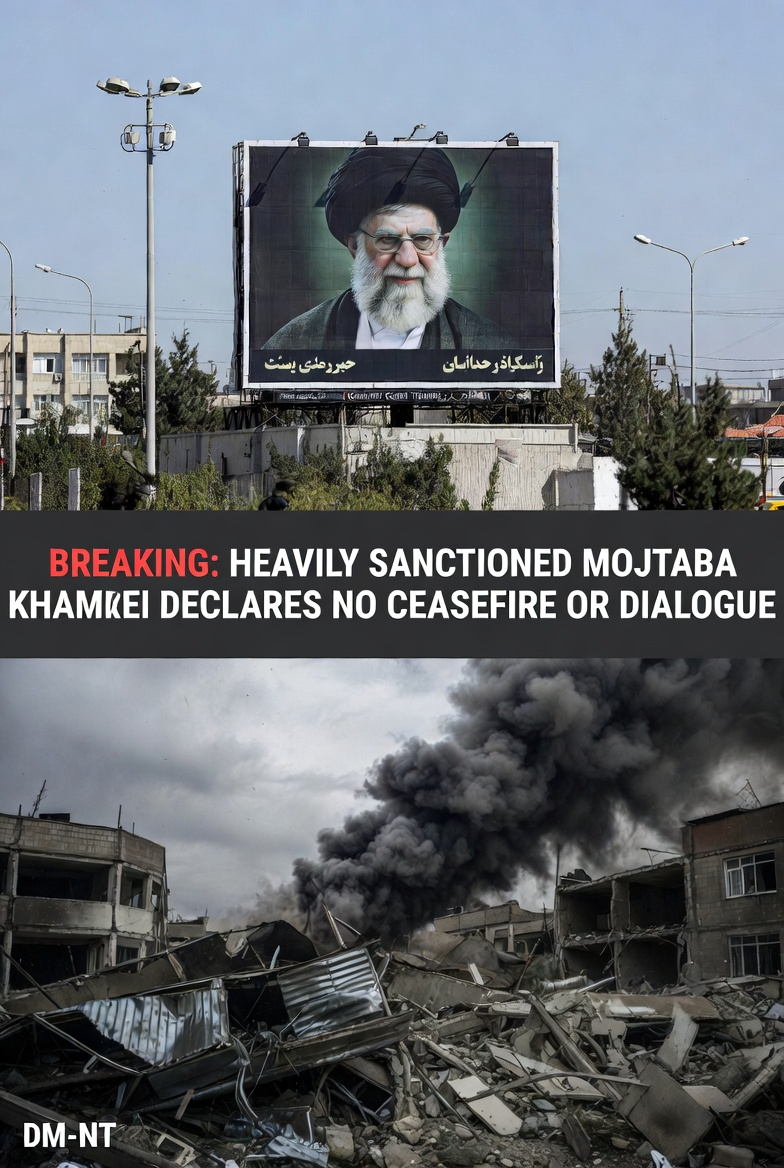
TEHRAN — In a move that extinguishes any lingering hopes for a diplomatic off-ramp, Iran’s Assembly of Experts has officially named Mojtaba Khamenei as the new Supreme Leader of the Islamic Republic. Succeeding his late father, Ayatollah Ali Khamenei, whose death amidst an intense barrage of airstrikes plunged the nation into chaos, Mojtaba’s elevation represents a chilling consolidation of hardline power. Crucially, the new absolute ruler of Tehran is a man who has been heavily sanctioned by the United States government for years.
For decades, the 56-year-old Mojtaba operated as the ultimate political gatekeeper. Lacking the extensive, formal theological credentials historically expected of a Supreme Leader, his influence was derived instead from his ruthless efficiency in the shadows. He managed his father’s inner circle, oversaw vast, untaxed state financial empires, and forged unbreakable alliances with the most extreme factions of the Islamic Revolutionary Guard Corps (IRGC) and the Basij paramilitary forces.

The rapid convening of the 88-member Assembly of Experts to rubber-stamp his succession highlights the absolute dominance of the IRGC. Moderate voices and rival clerics were completely sidelined in favor of projecting wartime continuity. His appointment is less a traditional religious succession and more a wartime mobilization by the regime’s deep state.
Mojtaba’s hostility toward the West is thoroughly documented. In 2019, the U.S. Treasury Department officially placed him on its sanctions blacklist. Washington accused him of working closely with the IRGC’s Quds Force and directly commanding the Basij militia during the brutal crackdowns on domestic protests. Elevating a figure already designated as a direct threat by the U.S. government sends an unmistakable message from Tehran: there will be no concessions, no compromises, and absolutely no dialogue with Washington.
The timing of this succession is explosive. Mojtaba assumes command on the eighth day of a devastating regional conflict. The U.S. military’s campaign has decimated Iran’s conventional naval forces, and the Pentagon is currently preparing strategic bombers equipped with bunker-busters to target the regime’s underground facilities. In response, Mojtaba has not sought a ceasefire. Instead, his first directives have reportedly involved ordering continuous, saturated ballistic missile strikes against U.S. military installations across the Arabian Peninsula.
Regional capitals, particularly Jerusalem, Riyadh, and Abu Dhabi, are bracing for the fallout. For Israel, Mojtaba represents the ideological core of the “Axis of Resistance,” a leader who fundamentally believes in the continuation of proxy warfare across Lebanon, Syria, and Gaza. For the Gulf nations currently caught in the crossfire of Iranian retaliatory strikes, his absolute refusal to negotiate guarantees that their economic and physical security will remain under severe threat.
Foreign policy analysts and intelligence agencies are viewing the transition with grave concern. While his father occasionally engaged in “strategic patience” or balanced the demands of Iranian reformists against the hardliners to maintain internal stability, Mojtaba is entirely a product of the security apparatus. Under his rule, the IRGC is expected to operate with unprecedented autonomy and aggression, effectively transforming Iran into a pure military dictatorship draped in clerical robes.
The coronation of Mojtaba Khamenei represents a point of no return. As he steps out from behind the curtain to take the reins of a nation actively at war, the geopolitical landscape of the Middle East grows significantly darker. With a U.S.-sanctioned hardliner now holding the absolute authority to wage war or make peace, the prospect of the latter has never seemed more remote. The world must now brace for a prolonged, uncompromising, and highly destructive confrontation.
