Mojtaba Khamenei Assumes Supreme Leadership Amidst Regional Inferno, Rejects U.S. Ultimatums
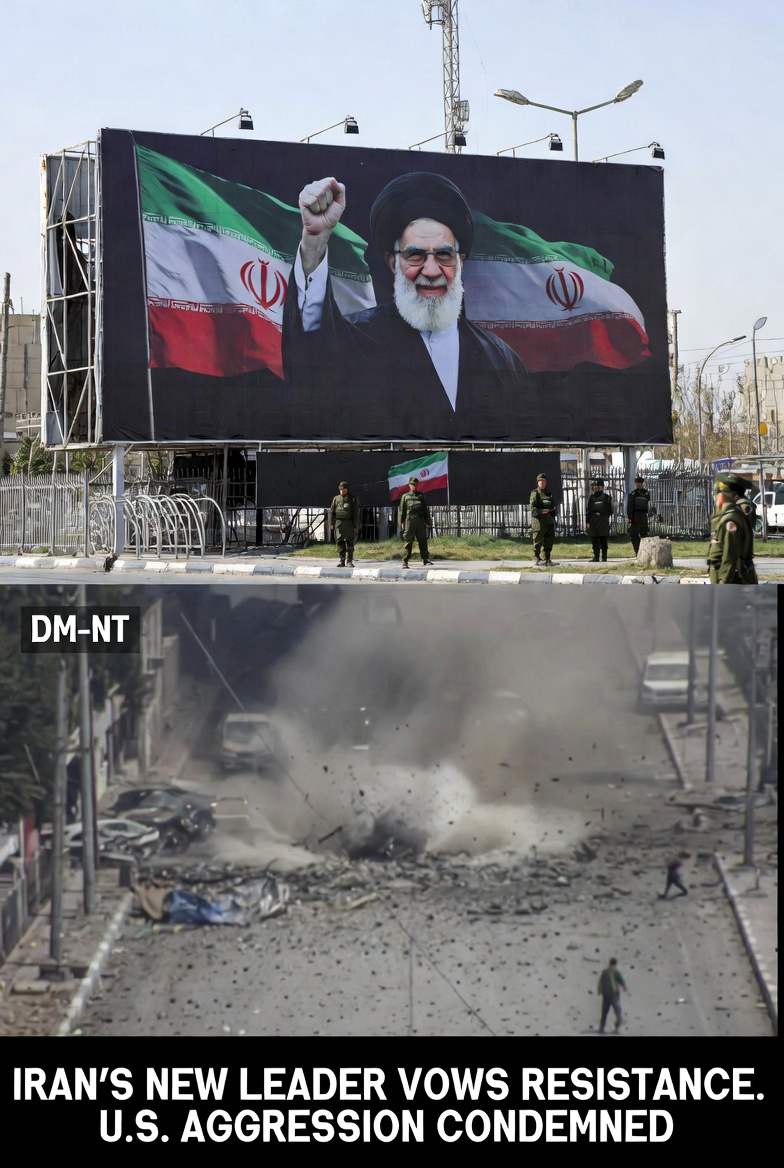
TEHRAN — The dust from the devastating American and Israeli airstrikes had not yet settled over the Iranian capital when the announcement shattered the tense silence of the Middle East. In a swift, heavily guarded, and historically unprecedented convening of the Assembly of Experts, Mojtaba Khamenei was officially declared the new Supreme Leader of the Islamic Republic of Iran. Succeeding his father, Ayatollah Ali Khamenei, who was confirmed killed in the recent bombardment, Mojtaba steps out of the political shadows and into the glaring fires of a region on the brink of total war.
The transition of power comes at the most precarious moment in Iran’s modern history. The nation’s military infrastructure is reeling from the relentless barrage of “Operation Epic Fury,” a joint U.S.-Israeli military campaign that has systematically targeted Iranian naval assets, air defense systems, and the top echelons of the Islamic Revolutionary Guard Corps (IRGC). Yet, for those hoping the decapitation of Iran’s leadership would force Tehran to the negotiating table, the ascension of Mojtaba Khamenei delivers a chilling reality check. The new Supreme Leader’s first official act was a fiery, uncompromising rejection of all Western ultimatums, setting the stage for a brutal and protracted conflict.
The Shadow Leader Steps into the Light
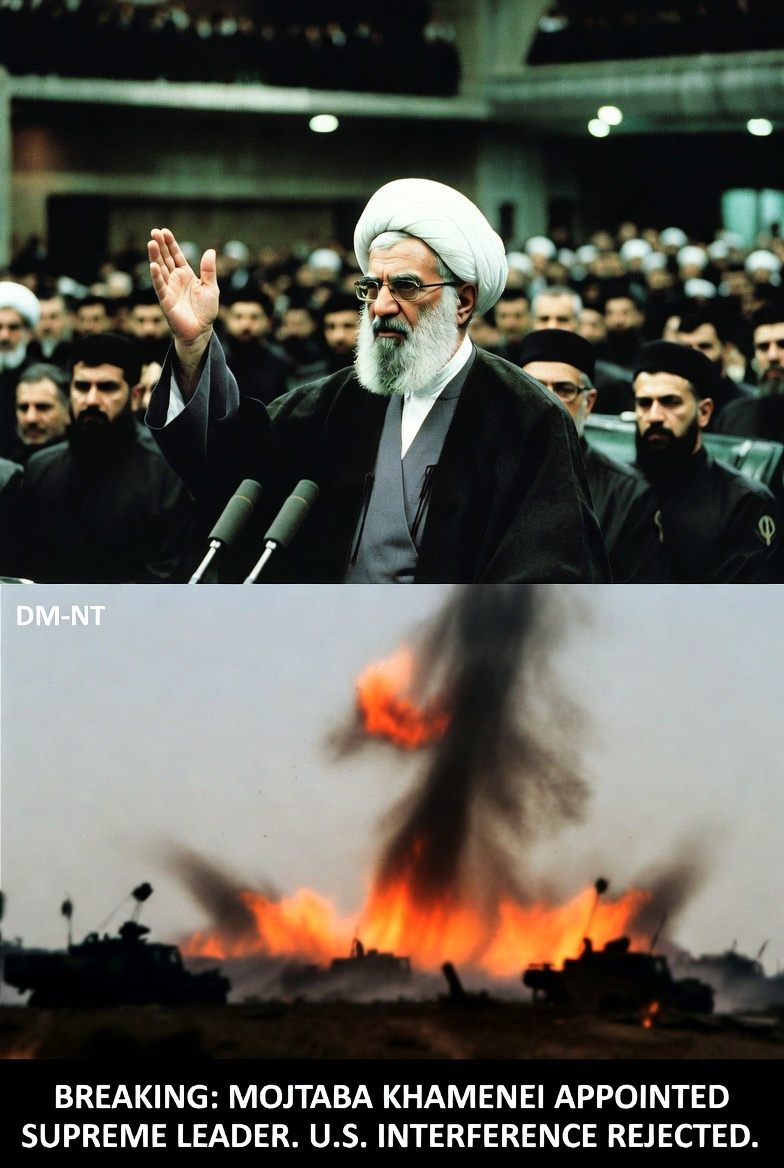
For over two decades, Mojtaba Khamenei, 56, operated as the ultimate political gatekeeper. While lacking the extensive theological credentials historically required for the role of Supreme Leader, he amassed unparalleled power behind closed doors. He managed his father’s inner circle, controlled the financial empires of the religious foundations, and, crucially, forged an unbreakable alliance with the hardline commanders of the IRGC and the Basij paramilitary forces.
His appointment by the Assembly of Experts—an 88-member body of Islamic clerics—was technically a constitutional process, but practically, it was a wartime mobilization. With the country under active bombardment, the regime needed to project immediate continuity and strength. Mojtaba’s deep ties to the security apparatus made him the only viable candidate capable of maintaining internal cohesion while orchestrating a military response.
Unlike his father, who occasionally balanced the demands of reformers and hardliners to maintain internal equilibrium, Mojtaba’s leadership represents a total synthesis of the clerical establishment and the military state. Under his rule, the IRGC is no longer just the armed wing of the republic; they are the undisputed architects of its survival and its vengeance.
A Categorical Rejection of Washington’s Terms
The ascension of Mojtaba Khamenei was immediately met with stark warnings from Washington. Following the strikes that eliminated his father, U.S. President Donald Trump publicly stated that the United States would not tolerate a new leader who continued the policies of regional destabilization, effectively issuing an ultimatum: stand down, dismantle the nuclear and missile programs, or face the complete destruction of the Iranian state.
Mojtaba’s response was swift and absolute. Broadcasting from an undisclosed, heavily fortified subterranean bunker, the new Supreme Leader delivered his inaugural address to the nation and the world. Dressed in the traditional black turban of a Sayyid—indicating descent from the Prophet Muhammad—his demeanor was starkly devoid of the poetic religious rhetoric his father often employed. Instead, his words were strictly martial.
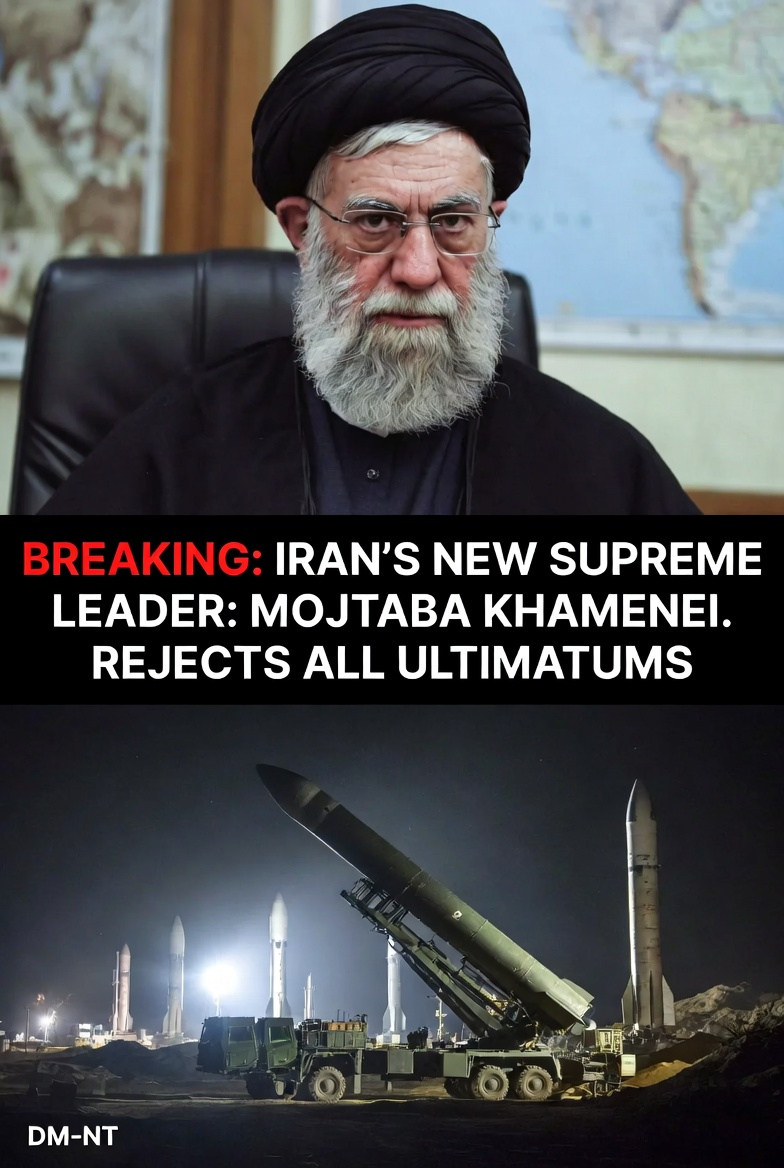
“The assassins of our leaders will not dictate the destiny of the Iranian people,” Mojtaba declared, his voice broadcast across state television and radio networks that had survived the bombings. “Washington issues ultimatums from the comfort of a continent away, believing they can break our resolve through terror and fire. They are profoundly mistaken. We do not mourn by surrendering; we mourn by striking back. Every threat, every demand, and every ultimatum from the Great Satan is hereby rejected. There will be no dialogue over the blood of our martyrs.”
The speech systematically dismantled any diplomatic off-ramps. Mojtaba explicitly ordered the Iranian Armed Forces and the “Axis of Resistance”—Iran’s network of proxy militias across Lebanon, Syria, Iraq, and Yemen—to activate comprehensive contingency plans. The era of “strategic patience,” a hallmark of his father’s later years, was officially declared over.
The Architecture of Retaliation
Mojtaba Khamenei takes control of a battered but highly lethal military apparatus. While the Iranian Navy has suffered catastrophic losses in the Persian Gulf and the Indian Ocean, and its conventional air defenses have been severely degraded, its asymmetric warfare capabilities remain potent.
Under Mojtaba’s direct command, the IRGC has accelerated its retaliatory operations. The strategy has shifted from reciprocal strikes to a doctrine of maximum regional disruption. Recognizing that they cannot win a conventional, symmetrical war against the combined might of the United States and Israel, Tehran is unleashing swarms of Shahed suicide drones and waves of ballistic missiles.
Crucially, the new Supreme Leader has expanded the theater of war. The targets are no longer confined to Israeli territory or U.S. assets within Iraq and Syria. In a dramatic escalation, Iranian missiles have begun striking American airbases and logistical hubs in neighboring Gulf nations, including Bahrain, the United Arab Emirates, and Kuwait. By dragging Washington’s regional allies into the crossfire, Mojtaba aims to fracture the U.S. coalition and make the political cost of the war unbearable for the Arab states hosting American troops.
Global Ramifications and the Economic Chokepoint
The uncompromising stance of Iran’s new leader has sent shockwaves through the global economy. Mojtaba has reiterated the ultimate threat: the complete closure of the Strait of Hormuz. With 20 percent of the world’s daily crude oil supply transiting through this narrow maritime corridor, the mere threat of anti-ship missiles and naval mines has triggered panic in global markets.
Oil prices have violently breached the $100-per-barrel mark, threatening to plunge the global economy into a severe inflationary recession. International shipping conglomerates are rerouting vessels away from the Middle East, crippling supply chains and skyrocketing freight costs.
Meanwhile, the international community watches in paralyzed horror. The United Nations Security Council remains deadlocked, with Russia and China urging an immediate ceasefire but refusing to condemn Tehran’s retaliatory strikes, viewing the initial U.S. and Israeli assassinations as a breach of international sovereignty.
The Rubicon Crossed
As Mojtaba Khamenei settles into the highest seat of power in the Islamic Republic, the geopolitical landscape of the Middle East has been irrevocably altered. The hope that a change in leadership might provide a diplomatic reset has evaporated. Instead, the United States and its allies find themselves facing a younger, deeply militarized, and intensely uncompromising adversary.
The region has crossed the Rubicon. With ultimatums rejected, missiles flying, and the global economy held hostage, Mojtaba Khamenei’s first days in power have guaranteed one grim reality: the war for the future of the Middle East will be fought to the bitter, devastating end.
