Hezbollah Drags Lebanon into the Iran War: Cross-Border Fire, Israeli Incursions, and Calls to Disarm the Militia
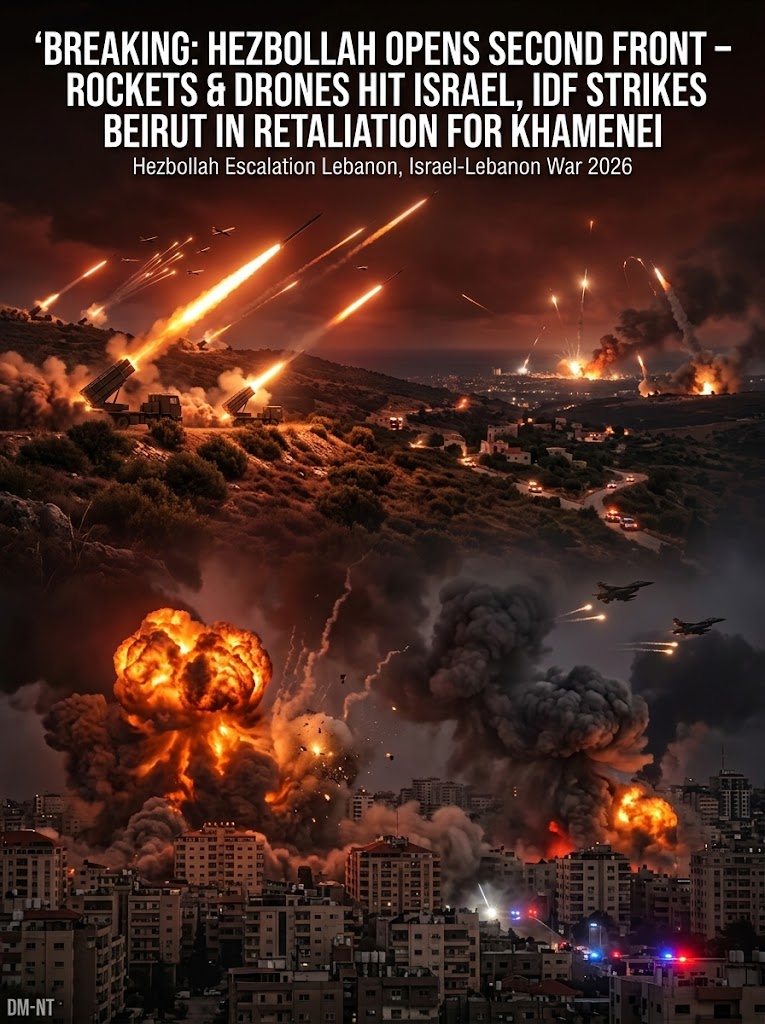
Beirut/Tel Aviv, March 4, 2026 – The US-Israeli campaign against Iran has spilled decisively into Lebanon, opening a dangerous second front as Iranian-backed Hezbollah escalates cross-border attacks in apparent retaliation for Supreme Leader Ayatollah Ali Khamenei’s assassination. Now in the war’s sixth day, the conflict risks engulfing Lebanon’s fragile state, already battered by economic collapse and prior 2024 clashes.
Hezbollah initiated major involvement on March 2–3, firing rockets, missiles, and drone swarms toward northern Israel—including targets near Haifa and radar sites—marking its first significant breach of the 2024 ceasefire. The group framed these as vengeance for Khamenei’s killing and US-Israeli “aggression.” Israel responded with intensified airstrikes on southern Lebanon, Beirut’s southern suburbs, and a ground incursion expanding Israeli presence along the border, seizing additional territory to neutralize threats. IDF statements describe operations as aimed at dismantling Hezbollah infrastructure, with reports of strikes on command centers and missile launch sites.
Casualties are mounting: Lebanese officials report dozens killed in Israeli raids, including civilians in villages near the Litani River, while Israeli sources note injuries from Hezbollah barrages, though Iron Dome interceptions limited damage. Air raid sirens have disrupted daily life in northern Israel, forcing shelters, and Lebanese airspace disruptions compound humanitarian strains.
Lebanon’s government, led by a caretaker administration amid political paralysis, has condemned the escalation and urgently demanded Hezbollah “hand over its weapons” to state forces. Prime Minister-designate figures and parliamentary speakers warn that the militia’s actions are transforming Lebanon from a “fragile bystander” into an “active battlefield,” risking national collapse. Retired generals describe the situation as “harsh and asymmetric,” with Hezbollah’s arsenal—estimated at tens of thousands of rockets pre-2024—still potent despite heavy losses in prior rounds.
From Iran’s perspective, Hezbollah serves as a key proxy deterrent, but its activation amid Tehran’s leadership vacuum and degraded military highlights strategic desperation. US officials, including President Trump, have signaled tolerance for Israeli operations to degrade Hezbollah, viewing it as linked to the Iran campaign. However, broader involvement could draw in other actors—Syria for resupply routes or Gulf states fearing spillover.
Nuances complicate the picture: Hezbollah’s battered state post-2024 (reduced capabilities, internal dissent) limits sustained escalation, yet symbolic retaliation preserves credibility. Lebanese civilians bear the brunt, with displacement fears echoing 2006 war horrors. Diplomatic efforts remain stalled; UN calls for restraint contrast with on-ground momentum toward prolonged operations.
Implications are severe: A full Lebanon front could fracture the country further, trigger refugee flows, and complicate US-Israeli endgames in Iran. If Hezbollah sustains pressure, it risks drawing Israel deeper, potentially requiring “boots on the ground” expansions that US senators already fear. As strikes continue, Lebanon’s fate hangs on whether proxy dynamics can be contained or if the war truly becomes regional Armageddon. The coming days will test Beirut’s pleas for de-escalation against hardline imperatives on all sides.
