Iran’s Leadership Vacuum Deepens Amid War; Succession Race Unfolds as Conflict Spreads to Lebanon and Iraq
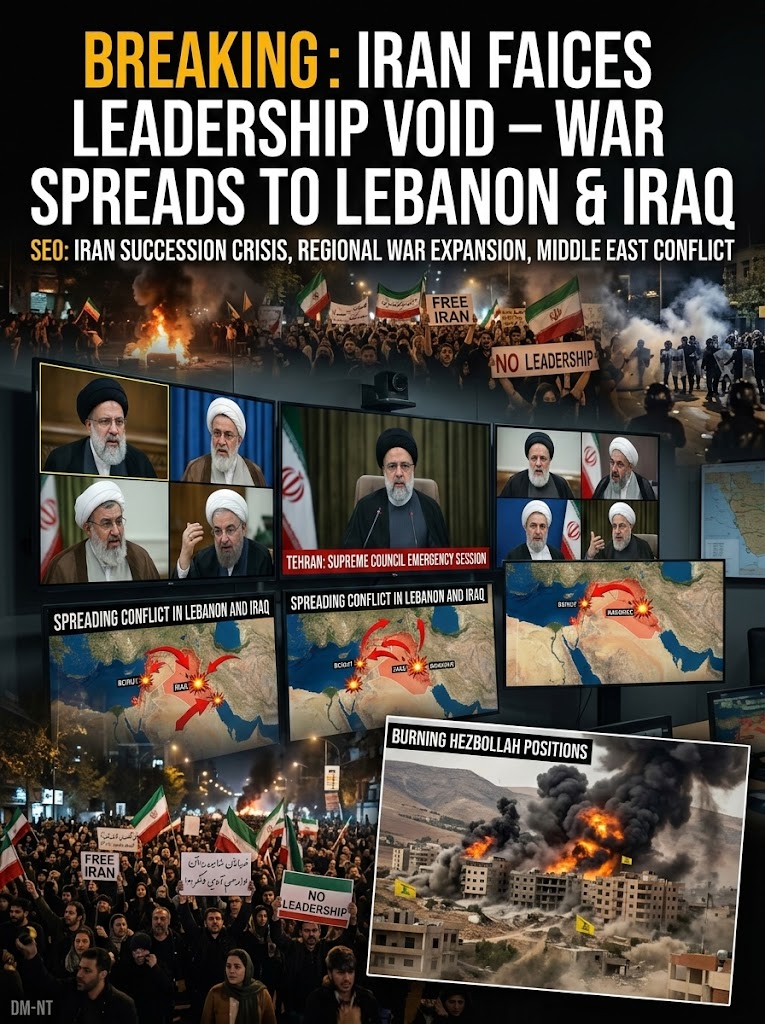
Tehran/Beirut/Baghdad, March 4, 2026 – Iran’s Islamic Republic faces its gravest leadership crisis since the 1979 revolution, triggered by the assassination of Supreme Leader Ayatollah Ali Khamenei in joint US-Israeli strikes on February 28. Now in its fifth day, the conflict has not only crippled military infrastructure but also plunged the regime into a high-stakes succession battle, while proxy forces drag neighboring countries into the fray.
Following Khamenei’s death—confirmed by state media along with several family members and aides—Iran activated Article 111 of its constitution, forming an interim three-member Leadership Council comprising President Masoud Pezeshkian (reform-leaning), Chief Justice Gholam-Hossein Mohseni-Eje’i (security establishment ally), and cleric Ayatollah Alireza Arafi (Guardian Council figure and Qom seminary head). This council governs temporarily, projecting continuity and defiance amid relentless airstrikes.
The 88-member Assembly of Experts, constitutionally tasked with selecting a permanent successor, suffered a devastating blow when its Qom headquarters was targeted mid-session, killing hundreds of clerics and disrupting deliberations. Reports indicate the body has shifted to virtual or secure meetings, but uncertainty persists over timing and consensus. Potential candidates include Mojtaba Khamenei (56, the late leader’s second son, with strong IRGC ties and rumored control over vast assets), though father-to-son succession risks backlash as un-Islamic or dynastic. Other names floated pre-crisis—such as Gholam-Hossein Mohseni-Eje’i, Asghar Hijazi, or Hassan Khomeini (grandson of founder Ruhollah Khomeini)—face challenges from battlefield losses and factional rivalries.
President Donald Trump has bluntly noted that many figures eyed as moderate alternatives were killed early, stating, “Most of the people we had in mind are dead.” This underscores US-Israeli strategy to decapitate leadership, potentially empowering hardliners or IRGC dominance if moderates falter.
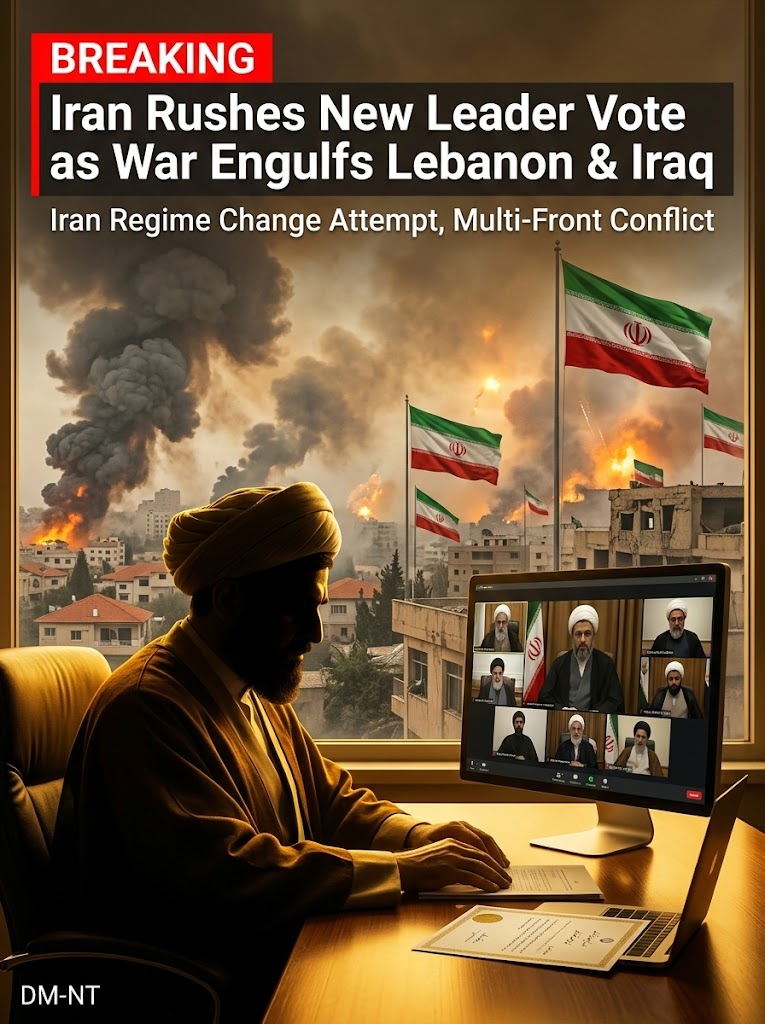
The crisis compounds as the war expands regionally. Hezbollah, Iran’s key Lebanese proxy, entered the conflict with rocket and drone attacks on Israel—the first major breach since the 2024 ceasefire—prompting Israeli ground incursions and airstrikes in southern Lebanon and Beirut. Casualties mount, with Lebanese officials demanding Hezbollah disarm amid fears of national collapse. In Iraq, Iranian-backed militias (e.g., Kataib Hezbollah, Harakat Hezbollah al-Nujaba) have launched drones and missiles at US bases in Erbil and Baghdad, vowing revenge for Khamenei. Protests near the US embassy in Baghdad highlight internal strains.
Implications are multifaceted: A hardline successor could intensify asymmetric warfare via proxies, prolonging multi-front escalation and risking broader involvement (e.g., Gulf states or NATO). Conversely, fragmentation might spark domestic unrest or IRGC power grabs. Diplomatic channels remain frozen, with Tehran vowing “ferocious” operations while projecting regime resilience.
As clerics race to formalize succession—potentially within days—the leadership void amplifies war’s unpredictability, threatening not just Iran’s stability but the fragile balance across the Levant and Gulf. The coming announcements could define whether the Islamic Republic endures, hardens, or fractures under external pressure.
