U.S. KC-135 Refueling Aircraft Crashes in Iraq Amid Rising Regional Tensions
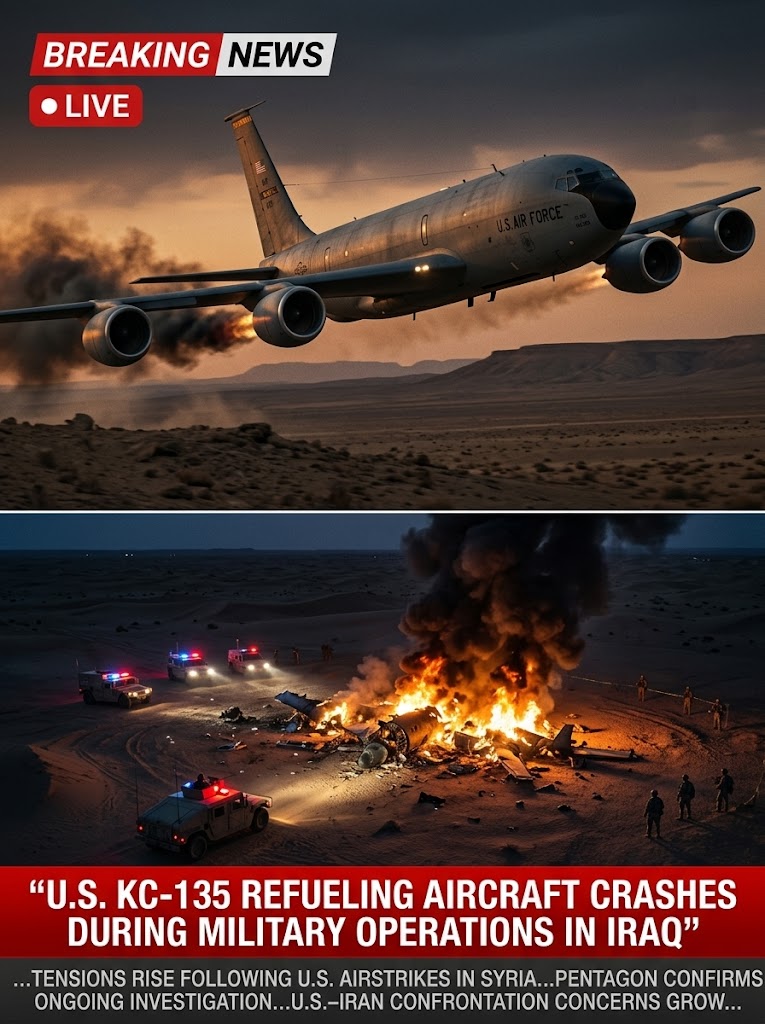
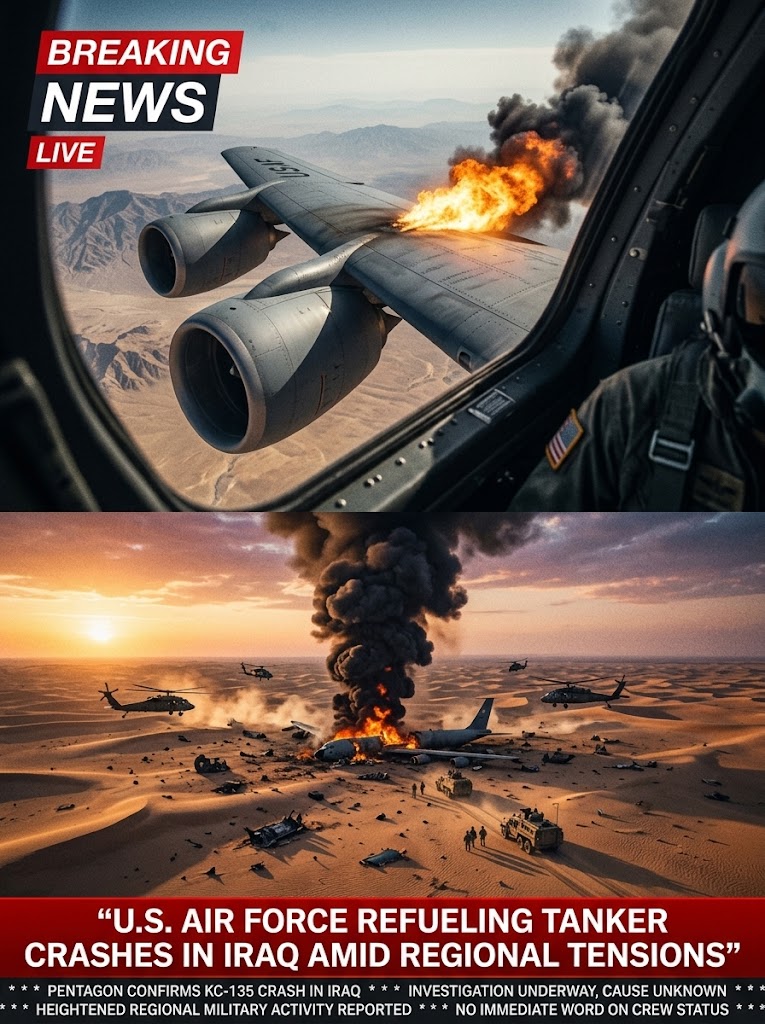
A U.S. Air Force KC-135 aerial refueling aircraft crashed in Iraq while supporting military operations in the region, according to preliminary reports, raising concerns about operational risks as tensions between the United States and Iran continue to escalate across the Middle East.
The aircraft reportedly went down during a mission connected to ongoing military activity in the area. U.S. defense officials confirmed that the aircraft involved was a KC-135 Stratotanker, a key refueling platform used to extend the range and endurance of fighter jets and bombers during combat and surveillance missions. The crash occurred while the aircraft was assisting operations linked to heightened security measures in the region.
Authorities have not yet publicly disclosed the exact location of the crash or the cause of the incident. Officials also have not confirmed whether there were casualties among the crew. Investigations are underway as military teams work to assess the situation and secure the crash site.
The KC-135 plays a central role in U.S. air operations worldwide. The aircraft allows fighter jets and other combat aircraft to remain airborne for longer periods by providing mid-air refueling, a capability considered essential during extended patrols, reconnaissance flights, and strike missions. In regions such as the Middle East, where distances between bases and operational zones can be significant, aerial refueling aircraft are often deployed to sustain high-tempo operations.
The crash comes at a particularly sensitive moment for U.S. forces operating in the Middle East. In recent days, regional tensions have increased amid a growing confrontation between Washington and Tehran. Military activity across the region has intensified, with U.S. forces conducting operations intended to strengthen deterrence and protect strategic interests.
Defense analysts say that while accidents involving military aircraft are not uncommon, incidents occurring during periods of geopolitical tension can attract heightened scrutiny. The presence of refueling tankers in operational zones often indicates sustained air operations involving fighter jets, surveillance aircraft, or strategic bombers.
Pentagon officials have indicated that a formal investigation will be conducted to determine whether mechanical failure, environmental conditions, or operational factors contributed to the crash. Military aviation investigations typically involve detailed analysis of flight data, aircraft maintenance records, and communications between the crew and command centers.
Local authorities and military personnel in Iraq are reportedly assisting in securing the crash area while U.S. teams evaluate the wreckage. Officials stressed that determining the cause of the incident will take time and cautioned against speculation while the investigation remains ongoing.
Background
The KC-135 Stratotanker has been a cornerstone of the U.S. Air Force’s aerial refueling fleet for decades. First introduced in the late 1950s, the aircraft has undergone numerous upgrades and remains widely used in modern operations. Hundreds of KC-135 aircraft continue to serve in the U.S. military and allied air forces around the world.
Iraq has hosted a significant U.S. military presence since the early 2000s, primarily focused on counterterrorism operations and regional security cooperation. In recent years, American forces have also been involved in broader security missions aimed at maintaining stability in the Middle East and supporting allied governments.
Tensions between the United States and Iran have fluctuated for years, often involving military deployments, sanctions, and regional proxy conflicts. Periods of heightened tension typically lead to increased military readiness and expanded aerial surveillance operations across the region.
Conclusion
While the immediate cause of the KC-135 crash remains unclear, the incident underscores the risks associated with complex military operations in an already volatile region. As investigators work to determine what led to the aircraft’s loss, the event is likely to draw attention to the operational pressures faced by U.S. forces deployed in the Middle East. Officials are expected to release further details once the investigation progresses, while regional observers continue to monitor whether the incident will have broader implications for ongoing military activity in the area.
