The $100 Shockwave: Crude Oil Erupts as Iran Threatens to Seal the Strait of Hormuz, Igniting Global Inflation Fears
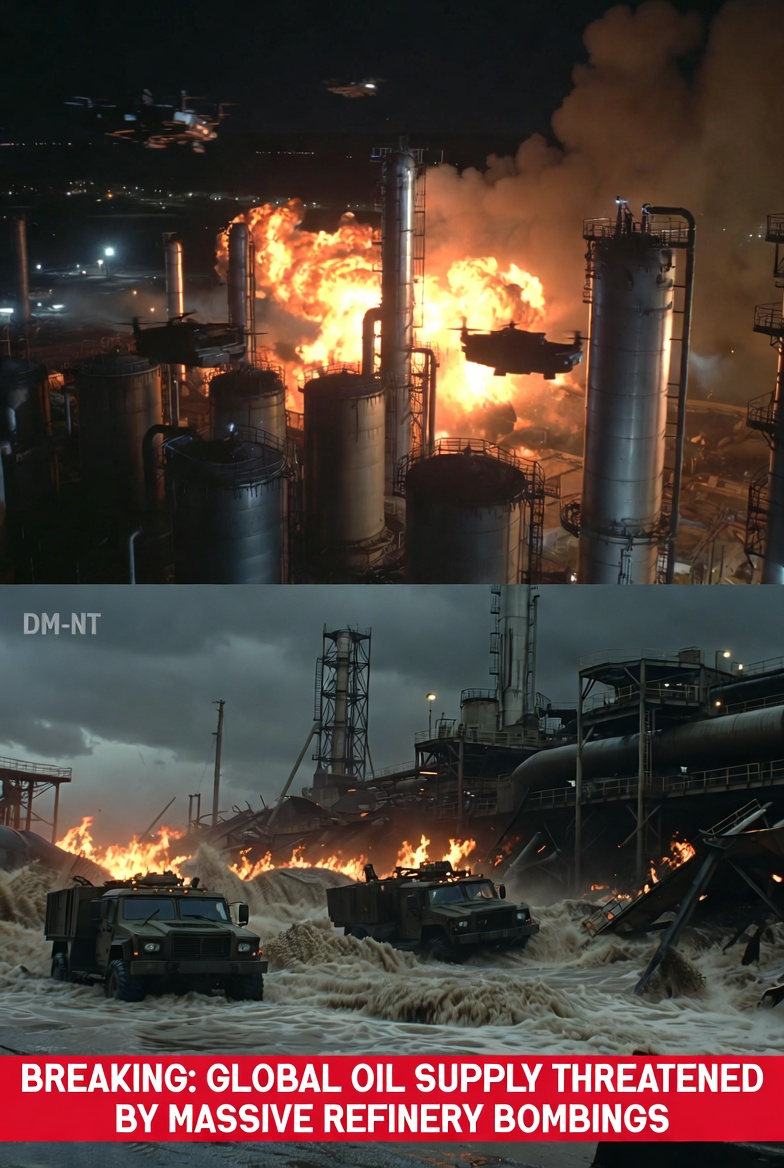
LONDON — The psychological and economic threshold has been violently breached. For the first time in years, the price of Brent crude oil has surged past the $100-per-barrel mark, sending violent tremors through global financial markets. The catalyst for this sudden and catastrophic price spike is not a gradual shift in supply and demand, but a stark, immediate geopolitical ultimatum: Iran’s newly appointed Supreme Leader, Mojtaba Khamenei, has explicitly threatened to completely blockade the Strait of Hormuz in retaliation for ongoing U.S. and Israeli military strikes.
As the shadow war in the Middle East spills over into a regional inferno, the world’s energy lifeline is now in the direct crosshairs. The resulting panic has traders, central bankers, and governments scrambling to prepare for an economic shockwave that threatens to unravel years of hard-fought battles against global inflation.
The World’s Most Vulnerable Artery
To understand the sheer magnitude of the panic gripping the markets, one must understand the unique geography and economic gravity of the Strait of Hormuz.
Located between the Persian Gulf and the Gulf of Oman, this narrow waterway is the only sea passage from the Persian Gulf to the open ocean. It is the undisputed chokepoint of the global energy trade. Approximately 20 percent of the world’s total global oil consumption—amounting to roughly 21 million barrels of oil every single day—passes through this strait. It is the primary transit route for crude oil exported from Saudi Arabia, Iraq, the United Arab Emirates, Kuwait, and Iran itself. Furthermore, it is a vital artery for liquefied natural gas (LNG), particularly from Qatar, the world’s top LNG exporter.
The physical reality of the Strait makes Iran’s threat terrifyingly credible. At its narrowest point, the waterway is just 21 miles wide, and the shipping lanes capable of accommodating massive supertankers are only two miles wide in either direction. This bottleneck forces slow-moving, heavily laden commercial vessels to navigate directly adjacent to the Iranian coastline.
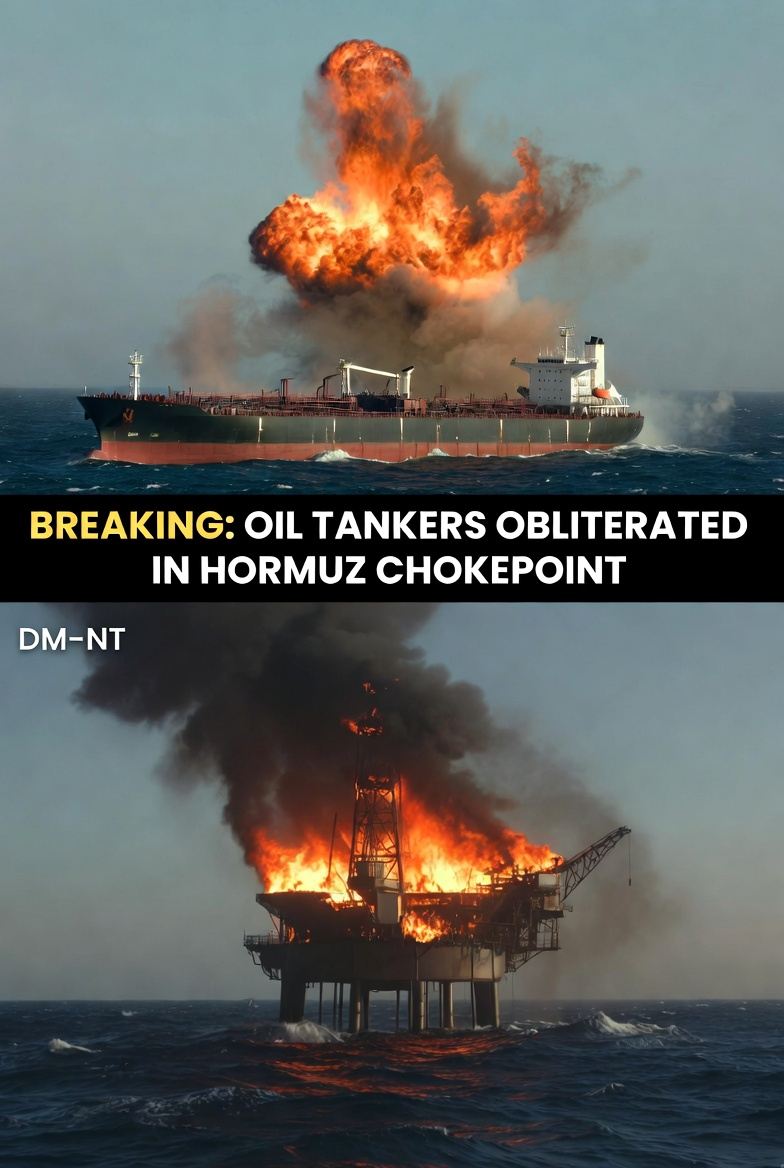
Military analysts confirm that Tehran does not need a massive conventional navy to close the strait. The Islamic Revolutionary Guard Corps (IRGC) possesses a vast arsenal of anti-ship cruise missiles hidden in coastal mountain bunkers, a massive stockpile of naval mines, and fleets of explosive-laden suicide drones. A few strategically placed mines or a single missile strike on a commercial supertanker would instantly render the strait uninsurable and impassable.
Market Panic: From Anxiety to Unprecedented Volatility
The reaction on the trading floors of London, New York, and Singapore was immediate and brutal. Within hours of Tehran’s broadcasted threat, futures contracts for Brent crude and West Texas Intermediate (WTI) skyrocketed, blowing past $90, $95, and finally shattering the $100 barrier.
“This is no longer a market driven by fundamentals; it is a market driven by absolute fear,” stated a lead energy commodities analyst at a major European investment bank. “The geopolitical risk premium has just been dialed up to maximum. If the Strait of Hormuz is actually closed, even for a few days, $100 a barrel will look like a bargain. We are modeling scenarios where a sustained blockade could push prices to $150 or even $200 a barrel.”
The immediate fallout is already devastating the maritime logistics sector. War risk insurance premiums for vessels attempting to navigate the Persian Gulf have spiked by over 500% in a matter of days. Several of the world’s largest shipping conglomerates and oil supermajors have announced an indefinite suspension of all transits through the strait, ordering their tanker fleets to drop anchor in the Arabian Sea or turn back entirely. For the volume of oil that moves through Hormuz, there are no viable alternative pipelines or overland routes that can absorb the shortfall.
The Inflation Nightmare Returns
Beyond the trading floors, the $100 oil shock is a nightmare scenario for the global economy. For the past several years, central banks around the world—led by the U.S. Federal Reserve and the European Central Bank—have waged aggressive campaigns of interest rate hikes to tame the rampant inflation triggered by pandemic-era stimulus and the war in Eastern Europe.
Just as these institutions were signaling victory and preparing to lower interest rates to stimulate slowing economies, the Hormuz crisis threatens to unravel it all. Oil is the foundational commodity of the modern global economy. When crude prices surge, the effect is a textbook example of “cost-push inflation.”
-
Aviation and Logistics: Jet fuel and marine diesel prices are already surging, which will drastically increase the cost of global freight, shipping, and travel.
-
Manufacturing and Agriculture: Petroleum is deeply embedded in the supply chain, not just for transport, but as a raw material for plastics, chemicals, and fertilizers. Higher fertilizer costs inevitably lead to higher food prices at the grocery store.
-
Consumer Pain: For the average citizen, the most immediate impact will be felt at the gas pump. Rising fuel prices act as a regressive tax, immediately draining discretionary income and dampening consumer spending, which is the engine of the global economy.
Central banks are now trapped in a vicious dilemma: if they keep interest rates high to fight this new wave of energy-driven inflation, they risk plunging the global economy into a deep recession. If they cut rates, inflation could spiral completely out of control.
An Uneven Global Fallout
The pain of this energy shock will not be distributed equally. The economies of Asia are uniquely vulnerable. China, India, Japan, and South Korea rely on the Persian Gulf for the vast majority of their energy imports. A prolonged disruption in the Strait of Hormuz would quickly lead to physical energy shortages, rolling blackouts, and industrial shutdowns across the continent.
Europe, still recovering from the severance of Russian gas supplies, finds its fragile economic recovery under severe threat. While the United States is somewhat insulated by its massive domestic shale oil production, it is inextricably linked to global pricing. American consumers will still face skyrocketing prices at the pump, creating massive political liabilities for the administration during an already volatile election cycle.
Desperate Measures and an Uncertain Horizon
In an attempt to calm the markets, the United States and several allied nations have announced emergency consultations regarding the coordinated release of millions of barrels of crude oil from their Strategic Petroleum Reserves (SPR). However, energy experts warn that SPR releases are a temporary bandage on a gaping wound. They cannot compensate for the structural loss of 21 million barrels a day if the Strait of Hormuz is truly sealed.
The global economy is currently teetering on a knife’s edge. The price of oil is no longer being dictated by economic models, but by the trajectory of missiles and the rhetoric of wartime leaders. As military forces mobilize in the Gulf and the rhetoric from Tehran grows increasingly hostile, the $100 barrel may only be the beginning of the most severe global energy crisis of the 21st century.
